
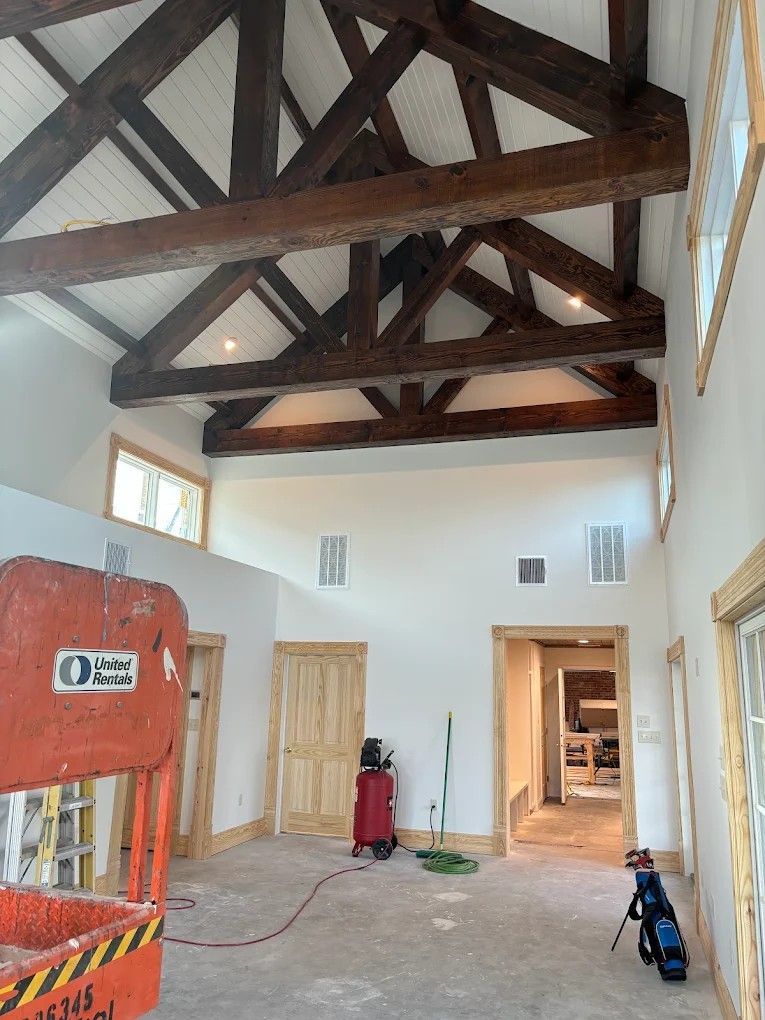
Spaces Rebuilt to Match How You Live
Interior remodeling in Iowa, LA for rooms with outdated layouts, failing surfaces, or storage and functionality that no longer fit the household's needs
After interior remodeling is complete, rooms function the way they were intended to—kitchens with enough storage to actually clear the counters, bathrooms without deteriorated tile work or inadequate ventilation, living spaces with crown molding that runs level and clean from corner to corner. Cajun Custom Home Improvements handles interior remodeling projects across Iowa, Lake Charles, Sulphur, and surrounding areas, addressing the layered problems that develop when a home's interior falls behind the household's needs or simply hasn't been updated in years. The work applies to kitchens, bathrooms, cabinetry, crown molding, and the full scope of interior changes that make a home's living spaces more functional and better-looking.
Interior remodeling isn't a single process—it's a collection of decisions about what stays, what gets removed, and how the replacement gets installed. Kitchen remodels require coordinating cabinet layout with countertop material and plumbing rough-in locations. Bathroom work involves understanding what's behind the walls before the tile comes down. Crown molding installation at quality standards requires cutting compound miters that account for walls that aren't perfectly square—which, in older Southwest Louisiana homes, is the rule rather than the exception.
Schedule a room-by-room walkthrough to identify what your interior remodeling project will realistically involve before work begins.
How Interior Remodeling Addresses Function and Wear
The interior remodeling process begins with understanding what each space currently fails to do—whether that's insufficient cabinet storage in a kitchen, tile grout that holds moisture and promotes mildew in a bathroom, or a floor plan that doesn't connect spaces in a useful way. Cajun Custom Home Improvements approaches work based on that assessment, with each phase addressing what the next one depends on: structural conditions before finish work, cabinet boxes before doors and hardware, substrate preparation before tile or flooring installation.
Once interior remodeling work wraps up, the changes clients notice fall into two categories: cosmetic and functional. On the cosmetic side, molding lines are consistent, surface finishes are even, and updated cabinetry gives rooms a visual clarity that older finishes couldn't provide. On the functional side, drawers open and close without binding, bathroom ventilation works as it should, and kitchen layouts allow for actual meal preparation rather than working around inadequate counter space.
Interior remodeling projects often uncover conditions that weren't visible before work began—moisture behind walls, subfloor irregularities, or wiring configurations that affect where fixtures or cabinetry can go. Understanding how those discoveries get handled, and what they mean for scope and sequencing, is part of what separates a well-managed interior remodel from one that runs into repeated mid-project problems.
Answers to Interior Remodeling Questions
Interior remodeling projects raise practical questions about process, sequencing, and what clients can expect as work progresses through a home.
What interior spaces does this remodeling service cover?
Kitchens, bathrooms, cabinetry installations, crown molding, and connected interior spaces are all within scope for interior remodeling projects.
How does humidity in Southwest Louisiana affect interior remodeling material choices?
High ambient humidity affects wood movement, paint curing times, and adhesive performance—cabinet construction, molding installation, and bathroom finishes all benefit from material selections suited to the regional climate rather than those rated for drier conditions.
What preparation is required before interior remodeling work begins?
Existing finishes, cabinetry, or fixtures being replaced need to be removed and the underlying substrate inspected before new materials go in—what's found at that stage determines whether additional work is needed before the planned installation can proceed.
When should crown molding be installed relative to other interior work?
Molding typically goes in after walls are painted but before final trim touch-ups, so the sequence depends on what other work is happening in the room at the same time.
Why does cabinetry layout matter more than cabinetry appearance alone?
Cabinet placement determines how countertop space, appliance clearance, and traffic flow work together—a visually updated cabinet set installed in an inefficient layout still produces a kitchen that's difficult to use day to day.
Cajun Custom Home Improvements can walk through your home's interior spaces and identify what a remodeling project involves before any commitments are made—connect to set up that initial review.