
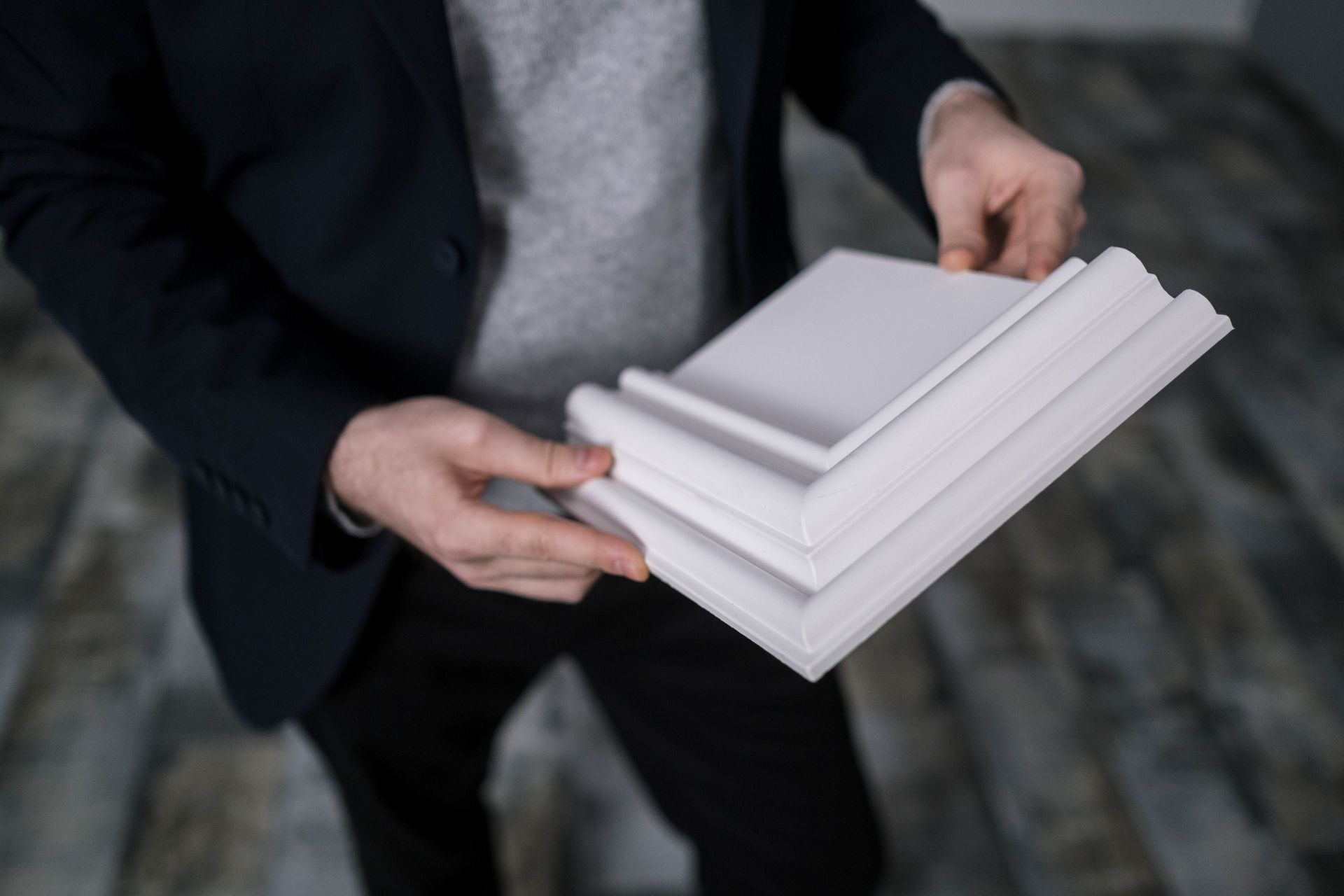
Finishing Details That Define Interior Spaces
Crown Molding in Iowa, LA for rooms where wall-to-ceiling transitions lack definition and the space feels visually incomplete
Interior spaces in Louisiana often feature high ceilings—a design characteristic common to older construction in the region, originally intended to improve air circulation before mechanical cooling was standard. Those tall ceiling heights make the wall-to-ceiling transition a prominent feature of the room, and without crown molding, that transition is typically just a painted corner that draws no attention and adds no visual weight to the space. Cajun Custom Home Improvements installs crown molding in Iowa, Sulphur, Moss Bluff, and surrounding areas as a finishing detail that gives that transition definition, framing the room's upper perimeter and making the space read as deliberately finished.
Crown molding installation requires precise miter and cope cuts at corners—the joint where two molding pieces meet at an inside or outside corner—and careful attention to maintaining a consistent reveal off the ceiling and wall across the full run. Rooms with walls that aren't perfectly plumb or ceilings that vary slightly in height require fitting adjustments that a standard straight-cut approach won't resolve cleanly. The difference between a well-fitted installation and a visible gap at the corner joint is primarily in the cut precision and how each piece is scribed to its surface.
Request a room assessment to review ceiling height, corner conditions, and what molding profile would work best for your space.
What Crown Molding Actually Accomplishes in a Room
Crown molding is installed at a spring angle—sitting against both the wall and the ceiling at a fixed pitch rather than flat against either surface. That spring angle means cuts must account for both the horizontal and vertical plane simultaneously, which is why crown molding corners are more complex to cut correctly than standard baseboard or door casing. Getting the angle right at every corner, both inside and outside, is what determines whether the finished installation looks intentional or shows visible gaps that draw the eye.
Once installed, you'll notice the room has a cleaner upper edge that anchors the ceiling plane and adds a layer of visual structure that painted drywall corners don't provide. In rooms with high ceilings, crown molding also helps reduce the sense of disproportion between wall height and the furnishings below—drawing the eye upward in a controlled way rather than letting the ceiling feel disconnected from the rest of the room.
Crown molding works as both a standalone improvement and as a finishing component of a larger remodel—kitchen projects, for example, often include crown molding above upper cabinetry as a way to transition between the cabinet top and the ceiling without leaving a visible gap. Profile selection—the specific shape of the molding—affects how the installation reads at different ceiling heights and room scales, and choosing a profile proportionate to the room is part of what makes the detail look appropriate rather than oversized or minimal.
What Homeowners Ask Before Molding Installation
Crown molding questions often center on profile selection, how installation handles difficult corners, and whether it works in rooms that aren't perfectly square.
What crown molding profiles work best at different ceiling heights?
Larger, more elaborate profiles suit rooms with ceilings of nine feet or more; smaller profiles work better in standard eight-foot rooms where oversized molding would feel crowded against the ceiling.
How does installation handle rooms where walls aren't perfectly square?
Corners that aren't at a precise 90-degree angle—common in older Iowa homes—require adjusting the miter cuts to match the actual angle rather than cutting to a standard 45 degrees.
Why is coping preferred over mitering for inside corners?
A coped joint, where one piece is cut to fit over the profile of the adjoining piece, holds its appearance better over time as seasonal wood movement shifts the pieces slightly—a mitered inside corner is more likely to open up and show a gap.
What preparation is needed before installation begins?
Walls and ceilings should be painted before molding goes up, as painting after installation risks masking the clean edge at the molding joint and creating an uneven finish line.
When does crown molding make the most sense as a standalone project?
Rooms with recently painted walls and ceilings that look unfinished at the ceiling transition are the clearest candidates—the molding adds definition without requiring any other work in the space.
Cajun Custom Home Improvements handles crown molding as a detail that deserves the same precision as any structural work in a remodel. Speak with us about your room dimensions and ceiling conditions to identify the profile and approach that will produce the right result for your space.